Portable Coffee Makers: A Hiker’s Review

As well as hiking, my other big addiction is coffee. I definitely can’t start my day without a brew (or two!) and there is nothing quite like having a coffee break in the middle of a hike surrounded by the beauty of nature. I’m clearly not alone, as there are plenty of products available for lovers of coffee al fresco, and now you can even freshly brew a cup on the go. Espresso Explorer offer two different types of portable coffee maker; wired and wireless.

Full disclosure: I am an affiliate for Espresso Explorer, and I will make a small commission if you decide to make a purchase through the links on this blog. I have not been paid for this review or asked to write it by Espresso Explorer, and this is fully my own opinion through using both these coffee makers which I was kindly gifted. Both have been tested with ground coffee only.

The Statistics
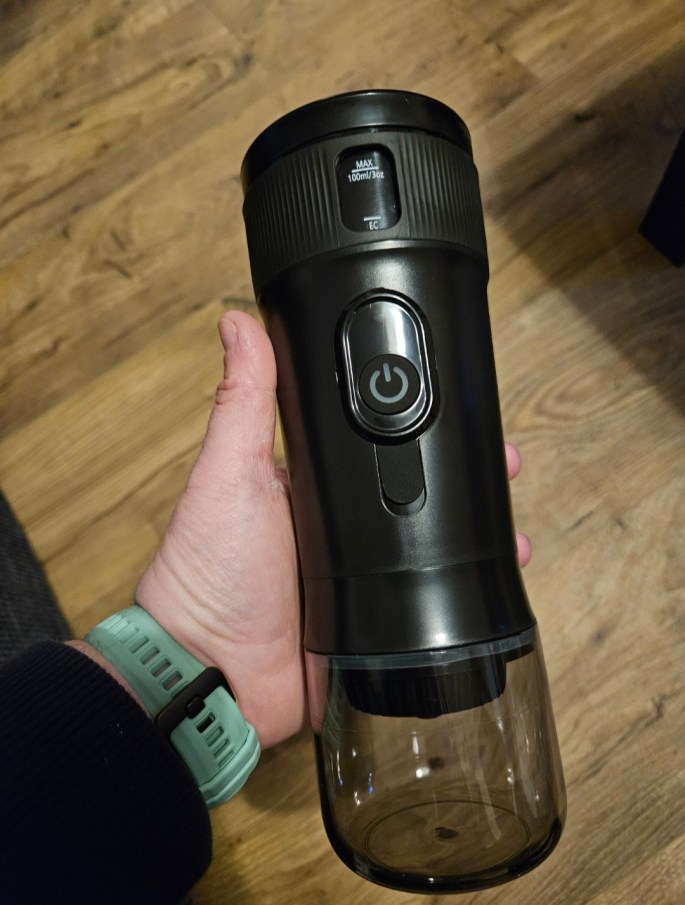
Portable Coffee Maker
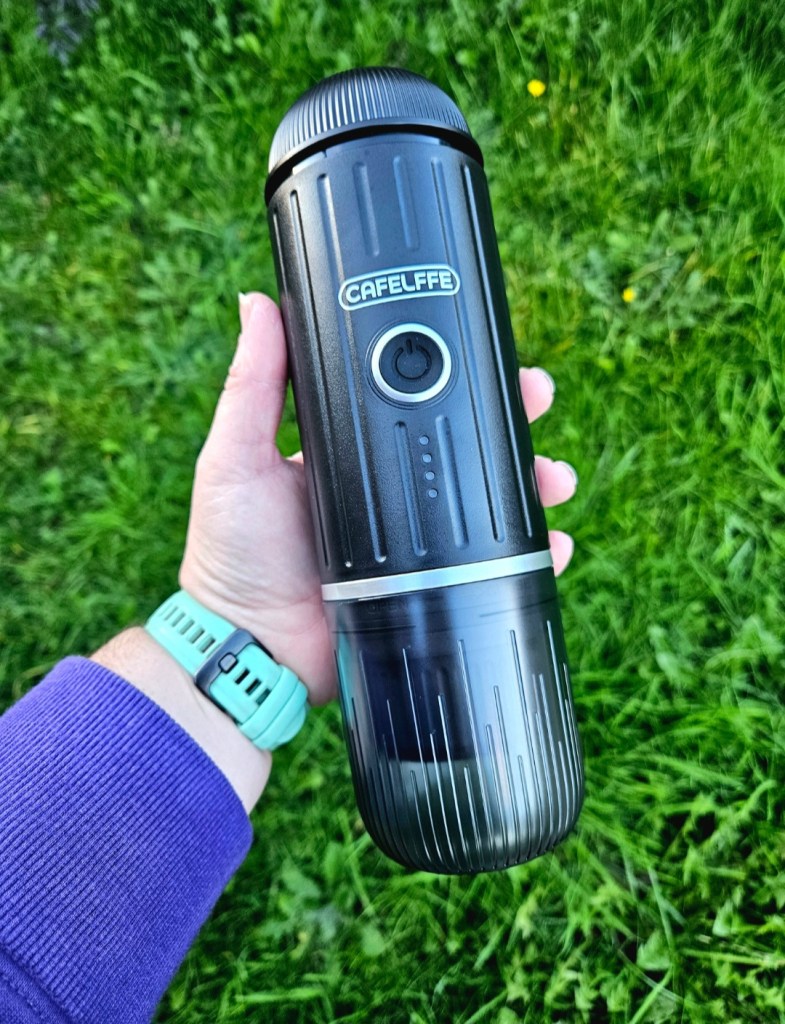
Wireless Coffee Maker

Portable Espresso MakerWireless Espresso Maker
Price £59.99£74.99
PowerUSB or Car Power OutletWireless Battery (USB C-Type Charging)
Weight700g800g

Both models will work with coffee pods (Nespresso shape) or ground coffee, and both come with a fabric storage bag, all necessary cables and accessories.

Portable Coffee Maker

The cheaper option of the two, the Portable Coffee Maker must be plugged into a power source to operate. The website claims that it weighs 700g, but it feels incredibly lightweight and I certainly didn’t notice any added weight when carrying it in a backpack. It brews coffee well, especially with freshly heated water, and once the water is hot the brewing process takes seconds.
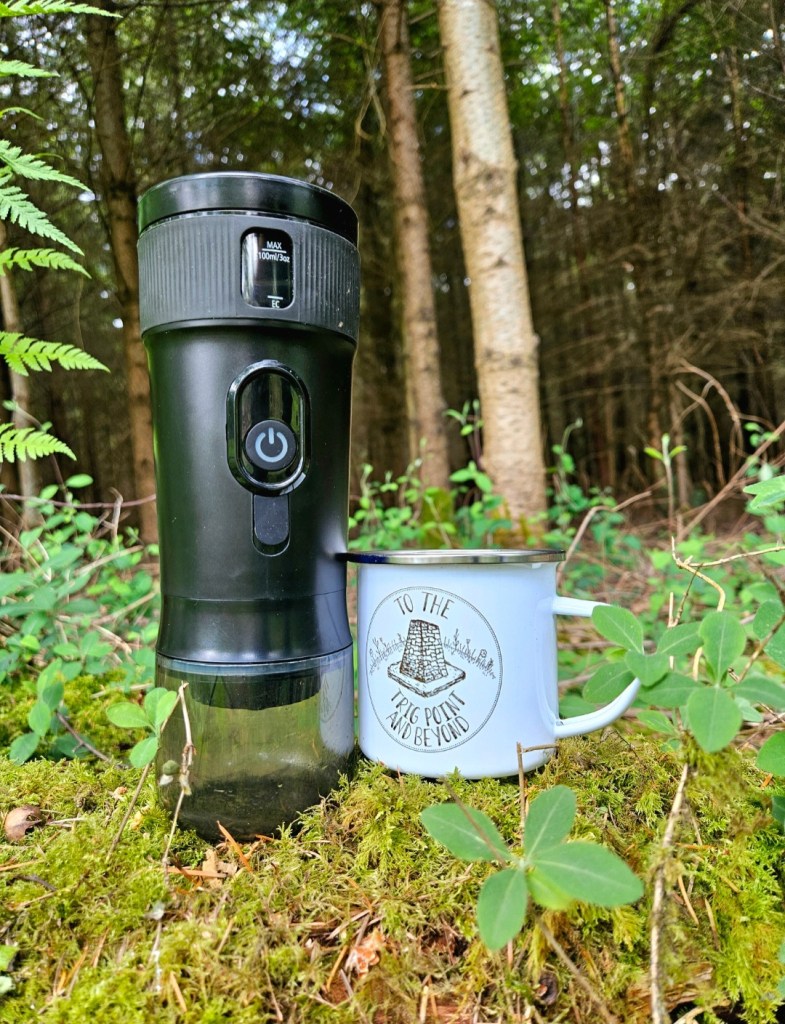
The main drawback of this model for hikers is that although it will make coffee through the USB of a powerpack comfortably, it is only through the car power outlet that it will heat water itself. Its maximum capacity is 100ml, so I usually take a small amount of hot water in my smallest insulated bottle. Added together, I find it pretty comparable to the weight of a large flask of pre-made coffee, with the added bonus of being fresh quality, but it is understandable that this might put some hikers off. It is great in the summer though as it will make a cold espresso, the strength of the brew is just lessened due to the cool temperature of the water.

Where this product really shines is for camping and road trips. It will take a few minutes to heat up the water through a car outlet, or you can use hot water from a camping stove. This unit has saved me from going without my morning coffee a few times now. I stayed at a hotel in the Netherland that didn’t have coffee, but I was able to whip up a brew in no time with this. When I went camping it also gave me the perfect fresh strong espresso hit the morning after waking up on only a few hours sleep. Lifesaver.

Wireless coffee maker

The Wireless Coffee Maker really improves on the portability as it can heat water for around 4 espressos when fully charged. Espresso Explorer claims it takes around 2 hours to charge completely, and both of these figures seem accurate from my testing. The website also states that it weighs 800g, and it definitely feels heavier than the other option.
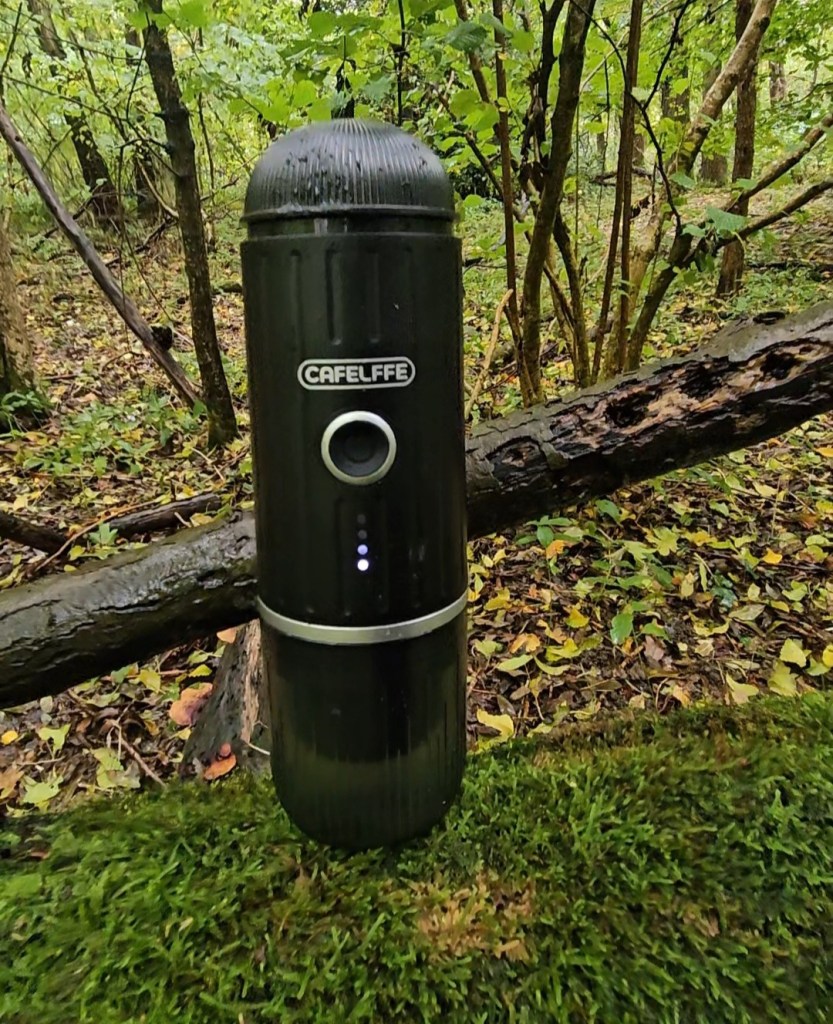
Other than the weight, the only other minor downside with this is that heating the water does take a few minutes so on a group hike you’re probably best bringing a flask to share (or make everyone else envious of your fresh coffee!) otherwise there might be a waiting time for everyone to have a cup. The brewing time itself is just as quick as the other coffee maker, it has a great draw and makes an espresso with a lovely crema that is so welcome mid-hike. Overall, there is very little negative to say about this product from a hiker’s perspective.

price

You’ll notice that I haven’t discussed the cost of either of these coffee makers in this review. As they were kindly gifted to me, I didn’t think that it was fair for me to discuss the pricing compared to the product. However, I will say that they appear to be competitively priced as cheaper coffee makers I’ve seen online don’t seem to have any kind of self-heating capability. I have also seen more expensive wireless options online. Espresso Explorer do occasionally run sales, or you can snag a discount if you choose to use my affiliate link.

Final Thoughts

I can imagine these being the perfect gift for any lover of the outdoors who also loves coffee; a touch of luxury for outdoor living. From the camper who lives for gadgets, to the van-lifer who needs something compact to fit their lifestyle, and the hiker who craves the kick from quality caffeine. If you’re looking to purchase one of these, I would definitely recommend that campers, van-lifers and roadtrippers opt for the Portable Coffee Maker. Hikers who want a brew with a view should go for the Wireless Coffee Maker.

I’ve absolutely loved using both of these products, and the Wireless Coffee Maker is now a staple of my hiking kit. I have also considered taking it to work; the thought of making an espresso from my desk is quite appealing, but I’ll take a fresh brewed coffee outdoors over that anytime!
The HoverAir x1: A Hiker’s Review

So many people on Instagram asked me to fully review this drone, so this is my take on it based on around 8 outings in a range of locations and environments. Needless to say, I’ve put it through its paces to get a full picture of its capabilities as best as I can!

Full disclosure: This review is not affiliated with Zero Zero Robotics and is completely my own opinion based on my experience of using this unit. I brought this drone second-hand from EBay, which voids the warranty. Zero Zero Robotics is currently testing an updated and improved version of this drone (Hover Air x1 Pro) at the time of writing.

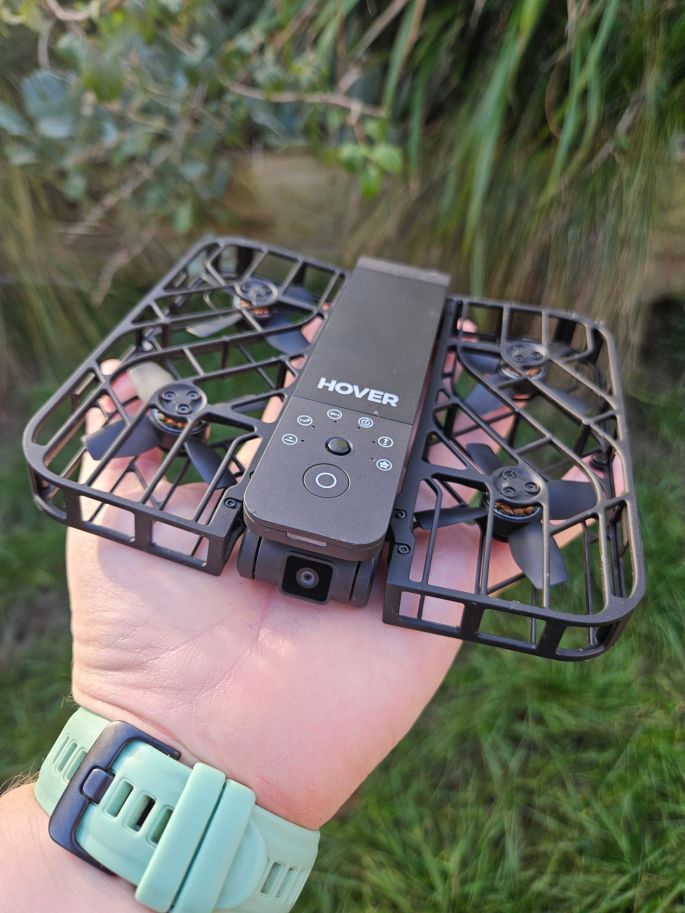
So first, some basic specs pulled from HoverAir’s website. This drone weighs an impressively light 125g and shoots using a 2.7K ultra HD camera mounted on a swivel. It has a maximum flight height of 15m above the ground, and onboard storage is 32GB. It operates using the two buttons on the top; one for power and to activate the 3 second palm launch, and one to cycle through the range of pre-set flight patterns that are offered. These include follow, orbital, hover, snapshot, and pan out, plus other more customised options that can track you from in-front or the side. It only tracks people, not animals or vehicles, but it has manual controls via the app. The app also lets you record audio and customise the flight patterns by altering height, distance etc. You can land the drone using the app, but it will land automatically when close enough to any flat surface which includes your hand.

The Positives

The biggest plus for me is just how user-friendly and intuitive this drone is to use. I knew that being as clumsy as I am, I would be likely to crash and break a drone, so I needed something that would be fairly foolproof. You don’t need to spend time setting a return “home” point, and it literally launches at the touch of a button. Just hold your hand under it, and it will land. The app also acts as a guide, keeping more complex flight patterns such as dolly-track locked out until you’ve completed a number of simpler flights. The cage around the fans also gives the drone a bit of protection if you end up crashing into a tree (more on that later!).

The picture quality is another highlight. I was worried when I saw some reviews reporting poor quality footage, but this hasn’t been my experience. I’ve genuinely been impressed that such a small drone is capable of capturing such great videos! Landscape shots and cropped footage do look poorer in quality, but the camera does a great job when tracking.

Another benefit for hiking is how portable the drone is. It fits comfortably in my pockets, and thru-hikers counting every gram of weight will appreciate this compact and lightweight piece of kit.

The Negatives

Whoa, we’re on the negatives already? Yes, but only because it is really hard to review the HoverAir without comparing it to other drones.

If you want a drone that can capture big panoramic shots from way up in the sky, this won’t be the one for you. It does have manual controls via the app but these can be janky, and with a maximum height of 15m it will limit what you’re able to film. The price tag might put people off, as it typically retails around £350 and there are other drones on the market which can cost less than this. Keep an eye out for sales and offers, especially if you want that warranty, as I have seen it for less.

One feature that you might expect is collision detection; unfortunately this drone does not have it. You do have to be careful where you’re flying it and how fast you’re moving, as if there are any problems the drone will just land itself. This is a nice feature as it stop flying if wind speed is too high, but if it decides that there is a problem or it loses you while flying over water it will just land itself right there. Water and drones don’t mix.

This photo is from when the drone ended up in a tree (in the name of testing, of course!). It managed to free itself before I could rescue it, and then shot off in the opposite direction! It did return back before it landed itself, but it’s a good example of why it is important to be mindful of your surroundings when you fly.

The biggest negative in my opinion is the battery life. A full charge will apparently give you 11 minutes continuous flying, or 20 flight patterns, and my testing reflects these figures. Although I’ve never run out while hiking, the battery is smaller than other similar drones, and might put off thru-hikers or content creators who may need to take a lot of footage. You can purchase spare batteries and a battery charging station for around £40 each, but this will take that price tag even higher.

Content creation

I wanted to touch on a couple of features specific for content creators as the HoverAir seems to be really compatible for capturing content for social media.

Vertical shooting mode is now my favourite, and you can use this on every flight pattern. The only problem I’ve come across is making sure that you’re centred; this image is from a pan-out where the angle wasn’t quite right and so I wasn’t in the centre of the image. This has only happened once so far, and you can preview footage on the app to check what you’ve filmed.

The HoverAir isn’t able to record audio, and if you want to add a voice over you will have to record to the app. It was pretty good at blocking out background noise and the sound of the drone’s fans (I tested it in moderate wind by a busy road), however as my phone automatically locks itself if it’s inactive, the mic got cut halfway through my rambling. If you like to include voice-overs it might be worth using a microphone or adding audio during editing to ensure you have the best quality, but as a fun feature I thought it was pretty good (as long as my phone didn’t lock!).

Things to consider

Despite weighing less than 250g, you do still need a license to fly this drone in the UK because it has a camera. It’s well worth checking the legal requirements in your local area before you fly!

Hikers who take a four-legged companion might want to consider if their dog needs training around the drone before you take them both into the wild together. I tested the HoverAir with 2 dogs, one who was completely uninterested and one who showed a lot of interest before getting bored. I can imagine some dogs being afraid of the noise, and a very interested dog might be able to jump and snatch it out of the air as it typically hovers at 1-2m for optimal tracking.

Final Thoughts

This is not like other drones, so I feel it’s unfair to compare it. If you want a drone that has basic tracking ability AND can get the landscape shots then this probably isn’t the right one for you. However, if you want a fun drone that has a range of tracking options, I would definitely recommend the HoverAir. I love this unit, and it’s biggest selling point is how easy it is to use. If I can use it, anyone can!

Blackdown

West Sussex’s county top, Blackdown, stands at 280m also making it the highest point within the South Downs National Park. It is located in the north of the park, close to Haslemere and the border with Surrey. This area of the park is within the Weald, geographically very different from the chalky South Downs Way, and the sandstone and acidic soils of the Greensand Ridge mean that plant life is restricted here. However, you will find a wonderful mixture of woodland and heathland, and views to inspire one of England’s greatest poets.

Route length3.8km
Route time45mins
AccessibilitySome paths are narrow and overgrown, especially in the wooded area close to the carpark where you might need to step over some tree roots, but most have excellent accessibility.
Challenge rating1/5 – Easy challenge. No obvious inclines; family-friendly with plenty of benches around to catch your breath or just enjoy the view. There are many paths leading off the top of Blackdown if you want to increase the challenge!
Dogs?Dog welcome but must be kept on leads at all times; grazing cattle in the area.
The “wild woods” close to the carparks

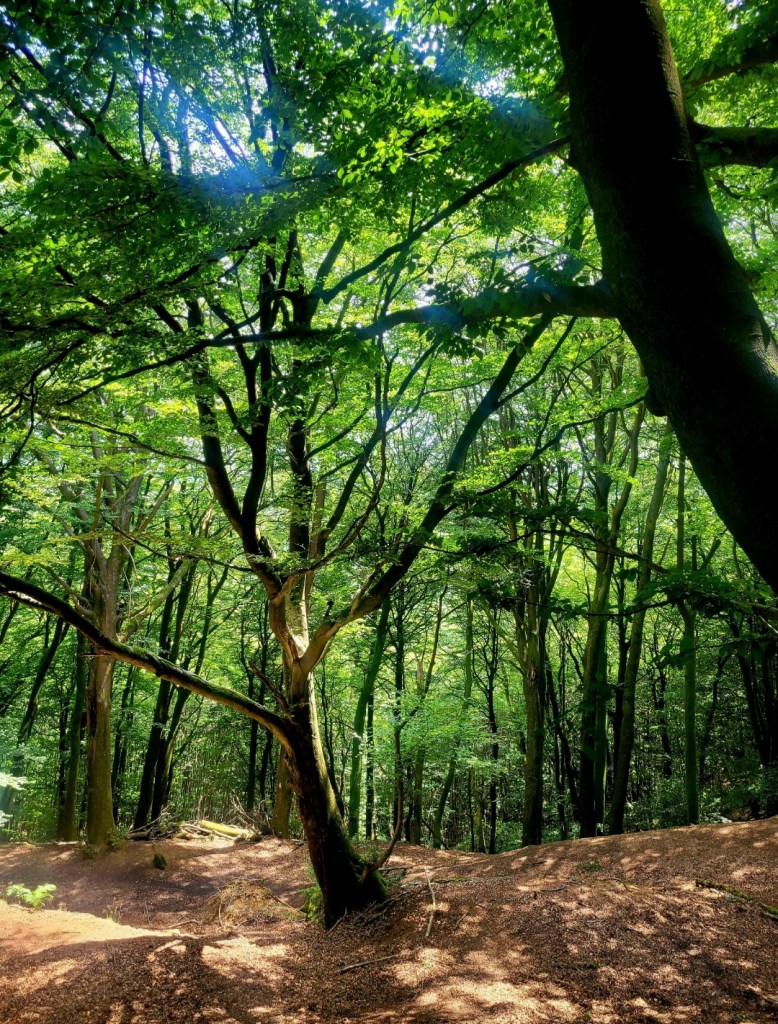
There are three car parks on Tennyson’s Lane (more about him later!) so although this a popular area that gets busy quickly there should be enough available parking. The initial bit of navigation from one of these carparks was a bit tricky, but there are a number of small paths running in the same direction, and it is very difficult to get lost. However, it does feel like a wild woodland here; ferns and fungi surround you and I can imagine this area could have the potential to be boggy in winter. Before long the path splits in two directions; open heathland or continuing into more woodland. We opted to go clockwise, heading into the woodland first.

Woodland on the east side of Blackdown

The woods here felt very different; more open and less wild, but still had plenty of places to explore. Paths are broad and easy to follow, but covered in heavy leaf litter. There are plenty of opportunities for adventures in the trees, at your own risk, especially as this east side of the Down is incredibly steep off the sides. Be careful where you explore unless you want a decent climb back up again afterwards!

As this path comes to the south of the hill, tucked just out of the way you will be greeted by an inscribed stone bench overlooking an amazing view; beautifully named The Temple of the Winds.

You came, and looked and loved the view, long-known and loved by me,
Green Sussex fading into blue with one gray glimpse of sea

Alfred Tennyson

Poet Laureate Alfred Lord Tennyson tired of the admirers visiting his home on the Isle of Wight, and in 1869 he built a new family home on his estate on Blackdown. He enjoyed the relative privacy this area offered, and apparently walked to The Temple of the Winds daily to enjoy this view of the South Downs.

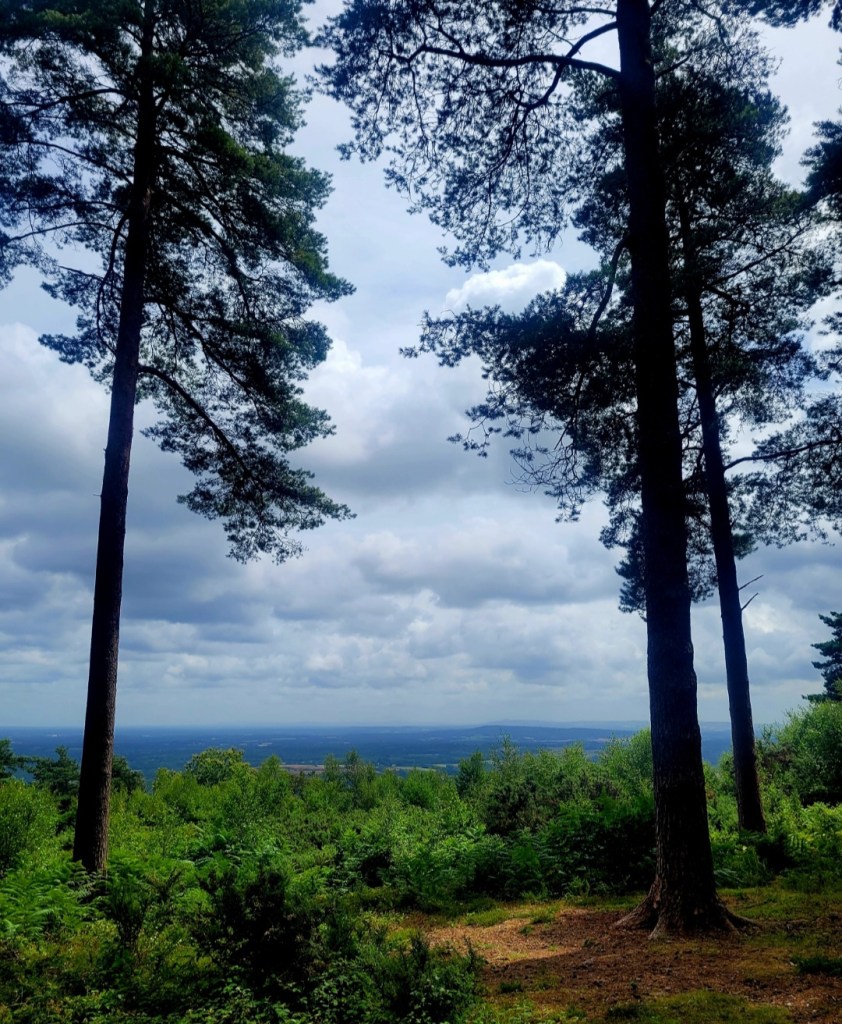
View of the South Downs from The Temple of the Winds

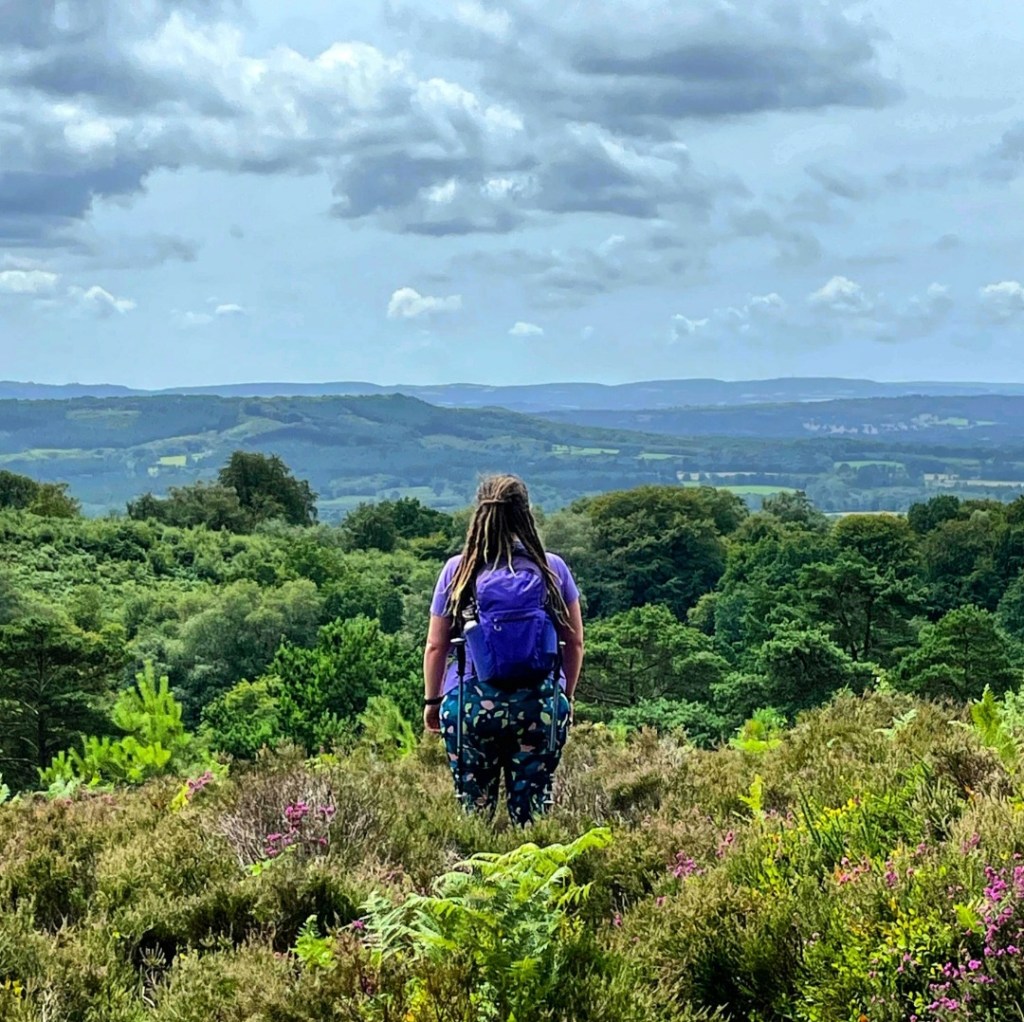
If you can tear yourself away from this view, following the path as it turns offers more glorious views from the top of Blackdown’s steep southern slopes. As the path heads north the trees part, leading into open heathland that covers the slightly less steep slopes of the west side of the Down. This was stunning in the summer, purple heathers and wildflowers everywhere. The glorious views continue, and you’ll find the trig point about halfway along this section, where the heathland meets the woods. There is also a view point here, and plenty of benches on the way to take it all in.

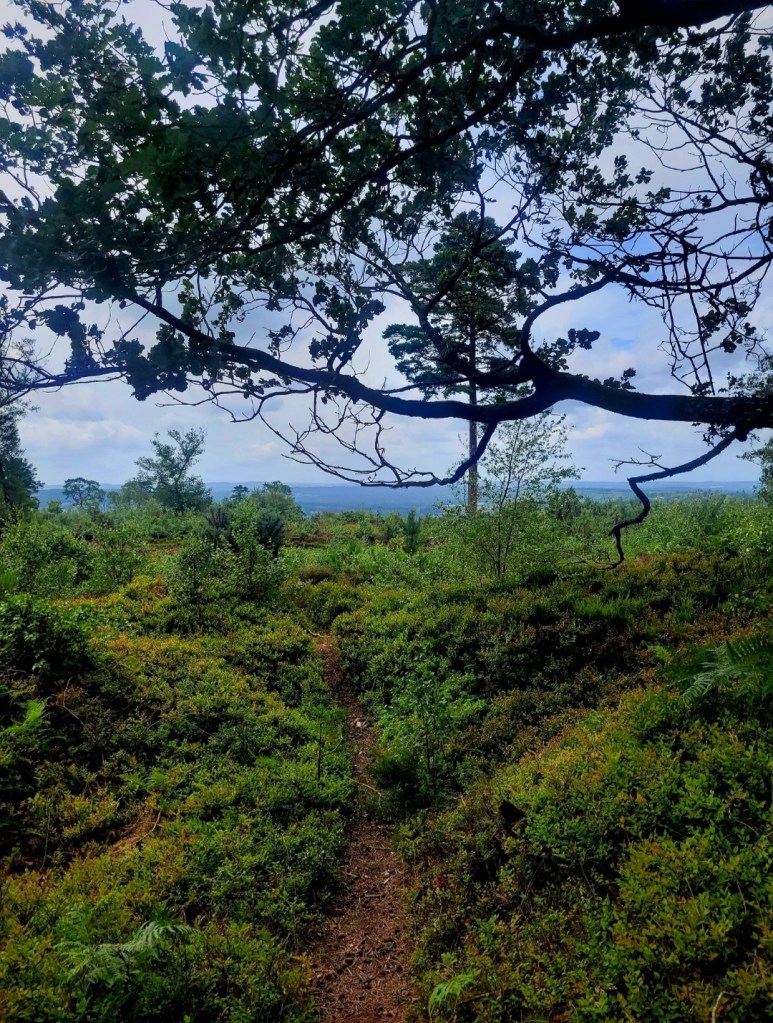
The path leaves the woods and enters the heath
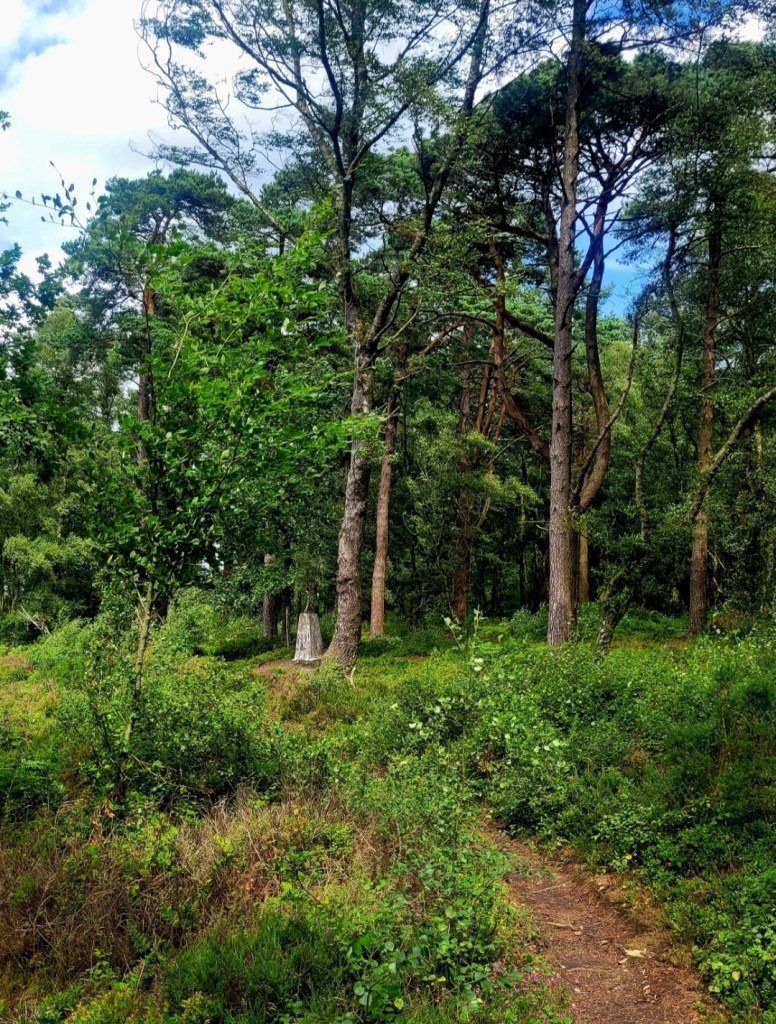
Blackdown’s trig pillar
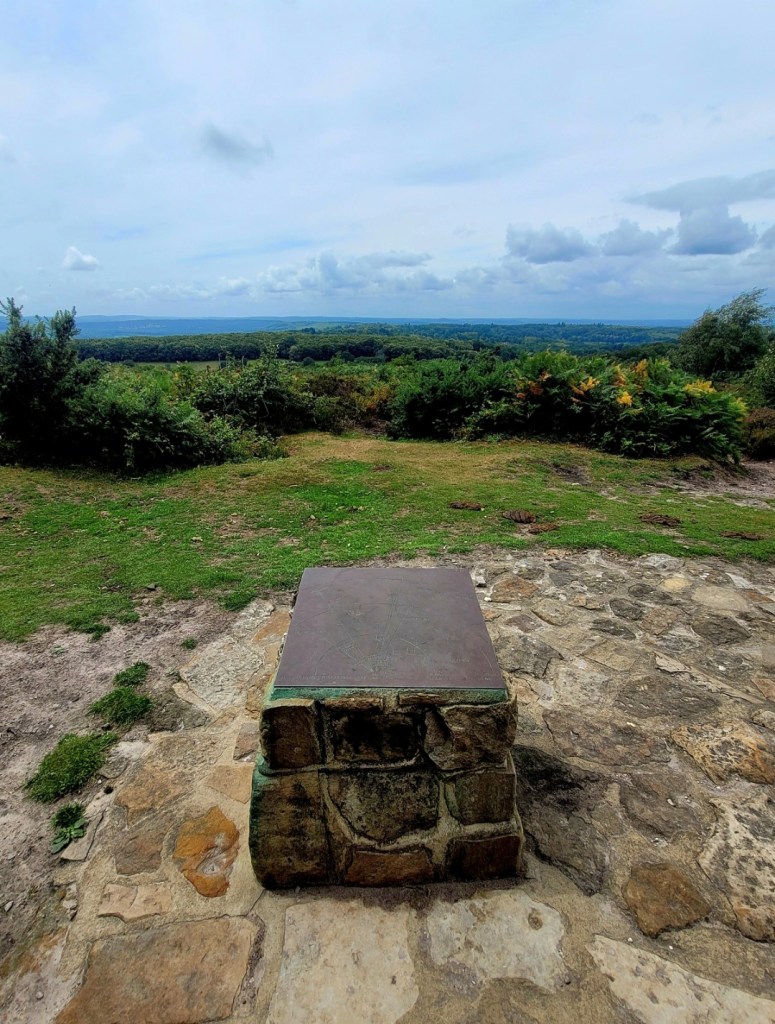
Viewpoint

Before the path re-enters the “wild woods” on the way back to the carpark, it winds past some ponds. The cattle seemed drawn here, but also seemed relaxed enough with people around.

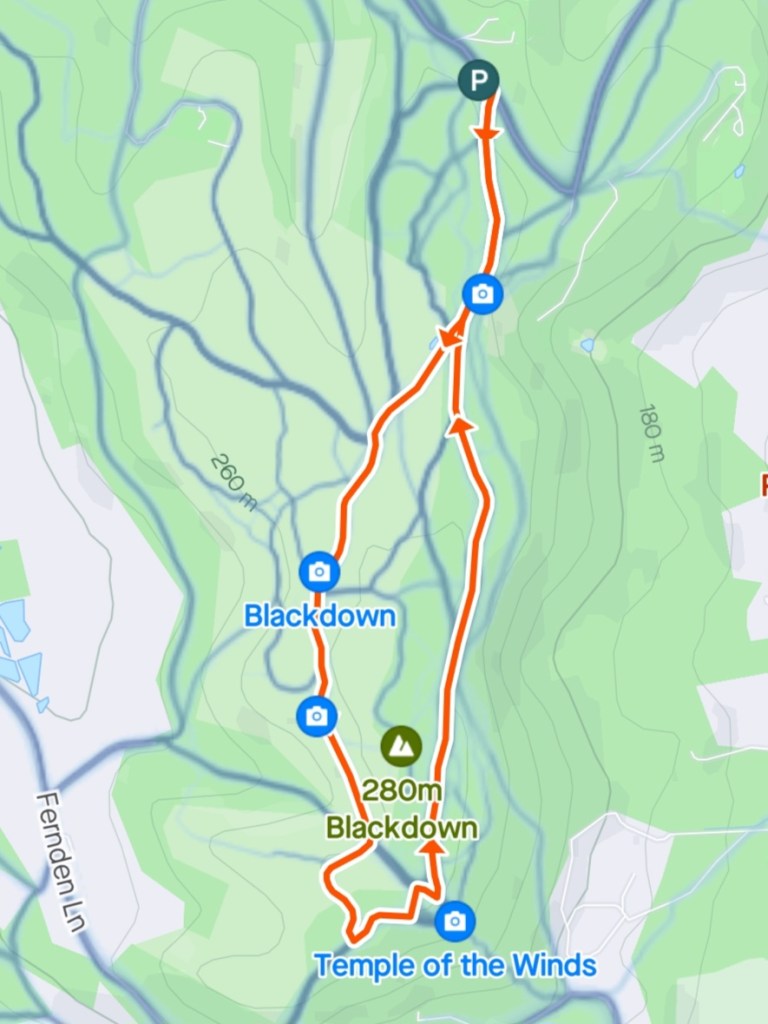
Before long you will find yourself back at the car park; although I have suggested 45mins for this short walk it will easily take you double this time if you are investigating every little path, spying fungi and checking out all the possible views (not that I did this, of course). Full Strava map and link below for this relaxed route, and if you want more of a challenge check out the other options available from this location including the 65km Serpent Trail which starts nearby in Haslemere.

Purple heathers on the heath
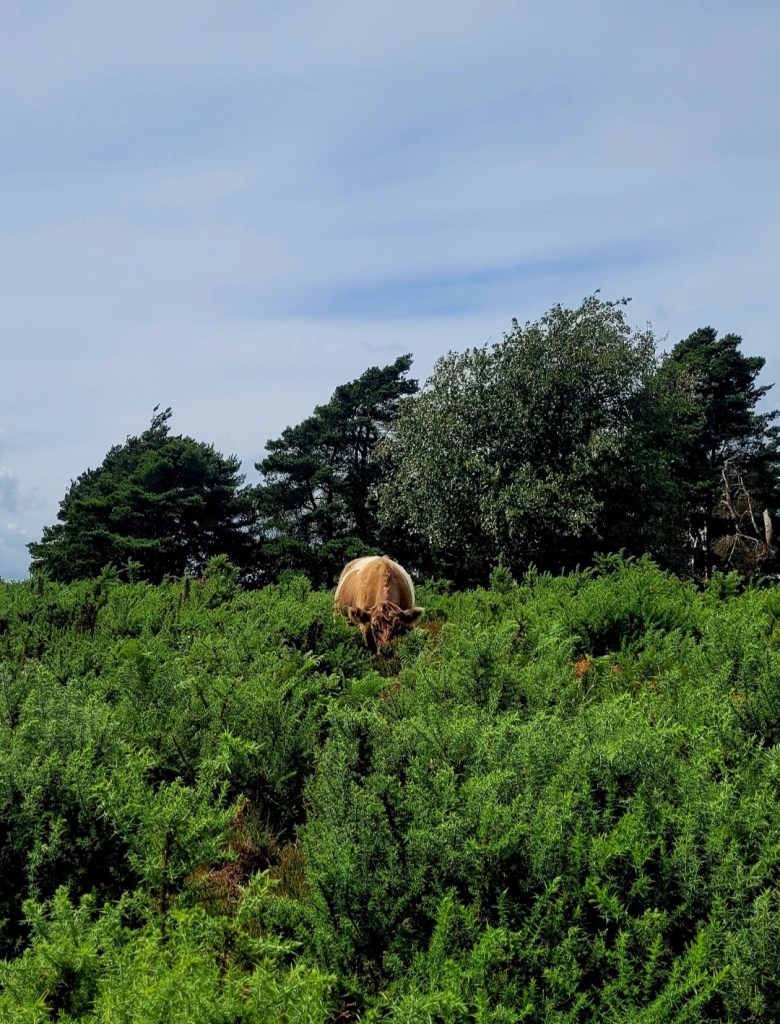
One of Blackdown’s grazers

Chanctonbury Ring & Cissbury Ring

I had to open this blog with my favourite spot on the Downs, the mighty Chanctonbury Ring. This 242m high Marylin sits just outside of Washington, West Sussex, had significance for bronze age, iron age and early Roman peoples. The ring of beech trees, first planted in 1760, make this site clearly visible from its exposed ridge across this area of the Downs.

Route length13.5km
Route time3 hours
AccessibilitySome steps access and narrow paths on Cissbury Ring, but all paths leading to and up Chanctonbury Ring are clear and either gravel or tarmac. Exploring the very top of Chanctonbury Ring is off-path.
Challenge rating2/5 – Mild challenge
An initial short but steep walk up to Cissbury Ring, but otherwise gentle and family-friendly.
Dogs?Dog-friendly route, but they must be kept on leads – especially on Cissbury Ring due to roaming horses and other livestock.

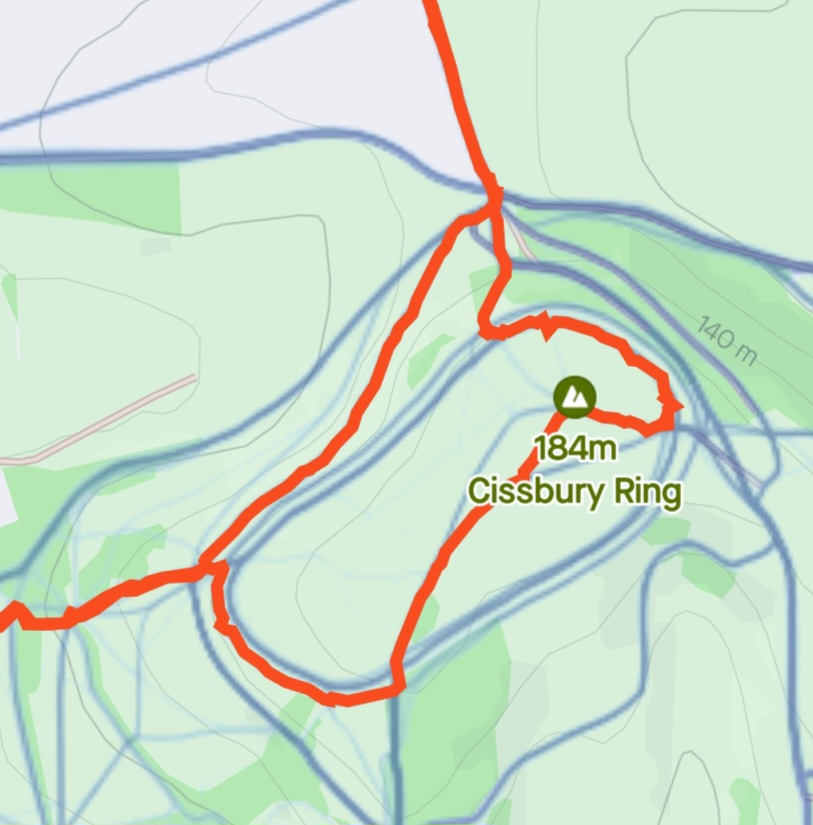
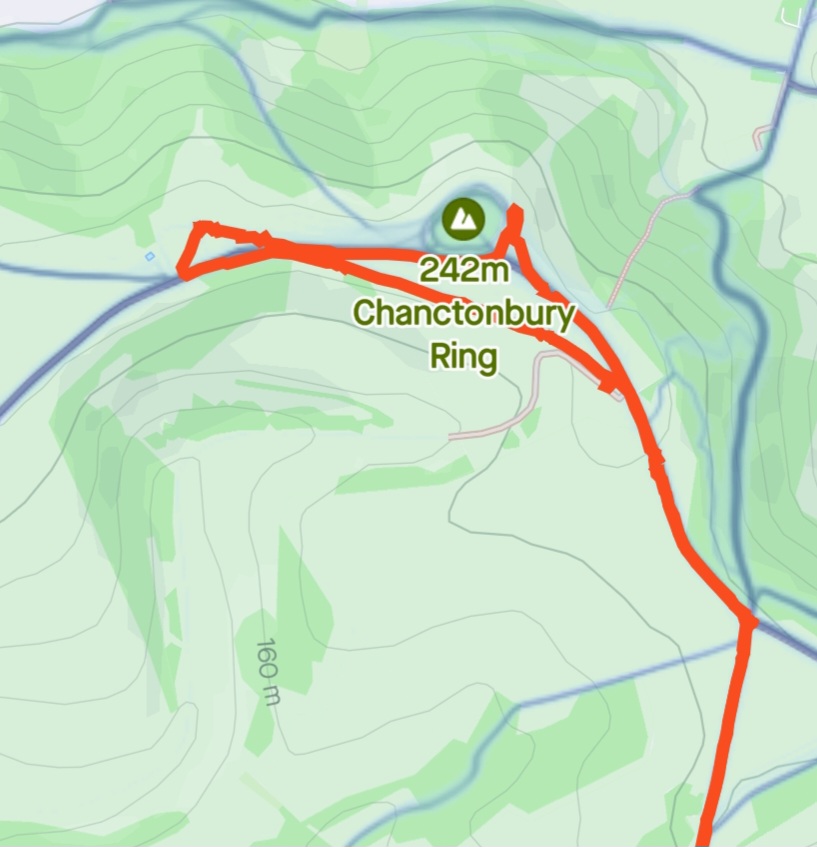
This 13.5km route starts at the larger historical site of Cissbury Ring, and takes a long, gentle walk up to the South Downs Way, taking in views of the south coast. Full map of the route below.

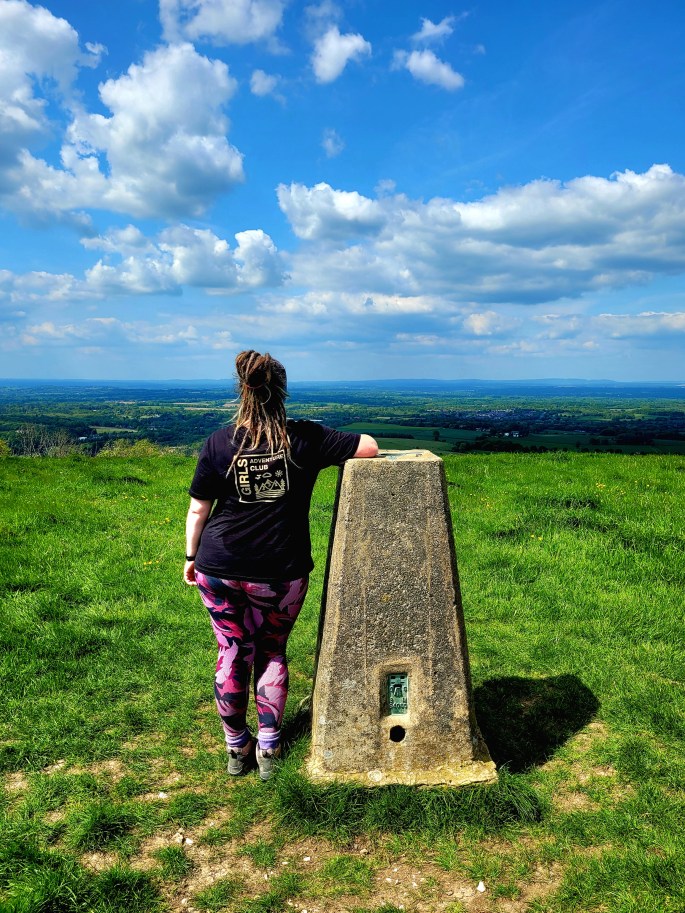
Cissbury Ring trig pillar (TP2184) as seen from the outer pathway.

The starting point is the car park on Long Meadow (BN14 0HU) near Findon. The path up the grassy hillside is steep but clearly visible, and leads into the edges of woodland. There are some rough steps and rocks as you pass under the trees; keep following the path up to reach the hill fort of Cissbury Ring. As the name suggests, this circular monument sits on the top of the hill. Take the anti-clockwise direction to find the trig point, cutting across the centre of the ring.

Head back to the rim of the ring, continuing anti-clockwise until you reach the path heading north down the side of the hill. Here, the path will meet a narrow road and small car park. Cross straight over and continue north up a wide and clear gravel path.

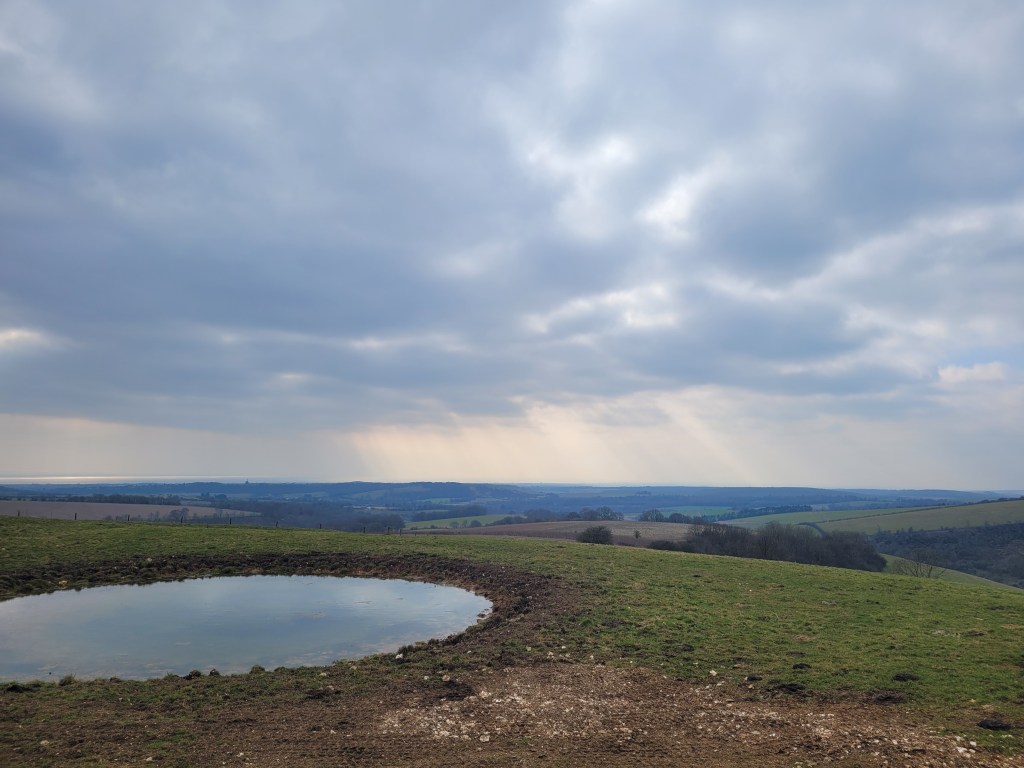
The south coast is just visible in the distance, looking down towards Lancing.

This path is a gentle incline, giving excellent views of the coast (Lancing and Shoreham, and Brighton on clear days), and following this for just over 3km will eventually intersect with the South Downs Way. The obvious ring of beech trees would have been visible from the walk up; go left on the South Downs Way for the last stretch up to the top of Chanctonbury Ring.

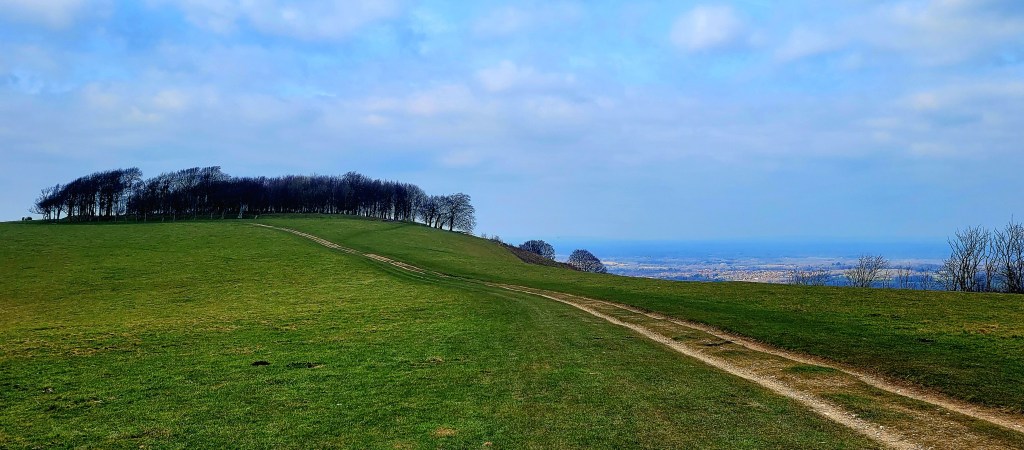
The distinctive copse of beech trees at the very top of Chanctonbury Ring

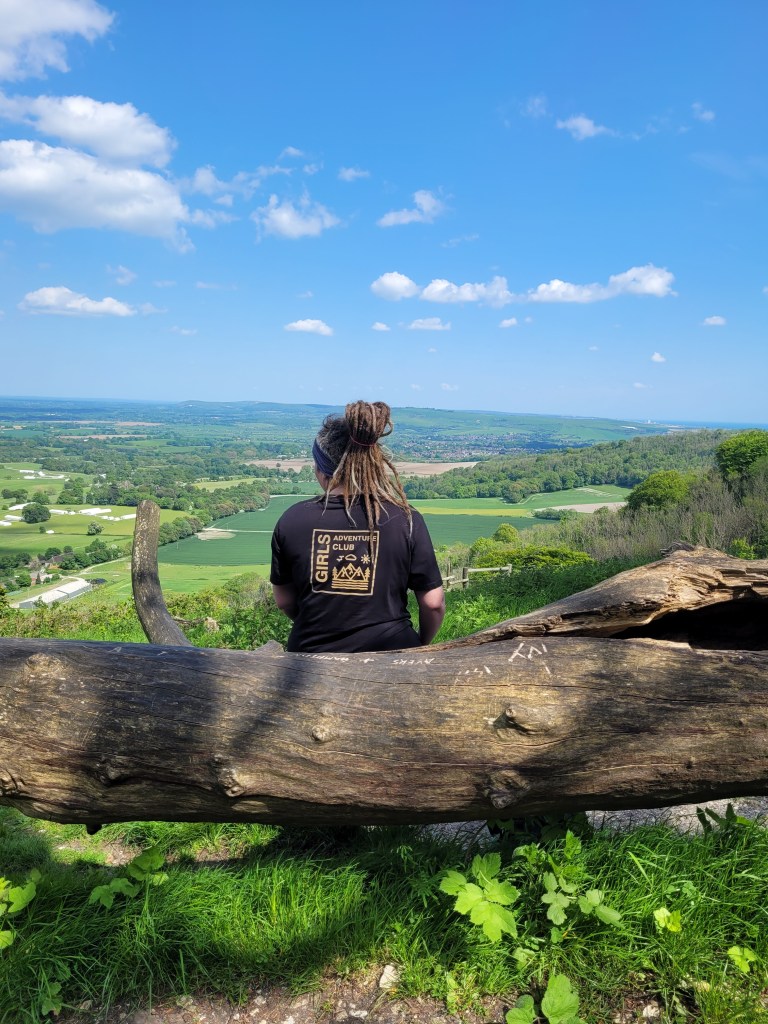
The views from the top of Chanctonbury Ring are impressive from all sides, but the route I took followed the curve of its southern ridge around to the west. This is a perfect spot to see the impressive display of Red Kites gliding on the thermals.

Head north just before the path splits to find the second trig point of this walk, which is where I chose to head back towards the beech trees and explore the area to find the all important view for a brew.

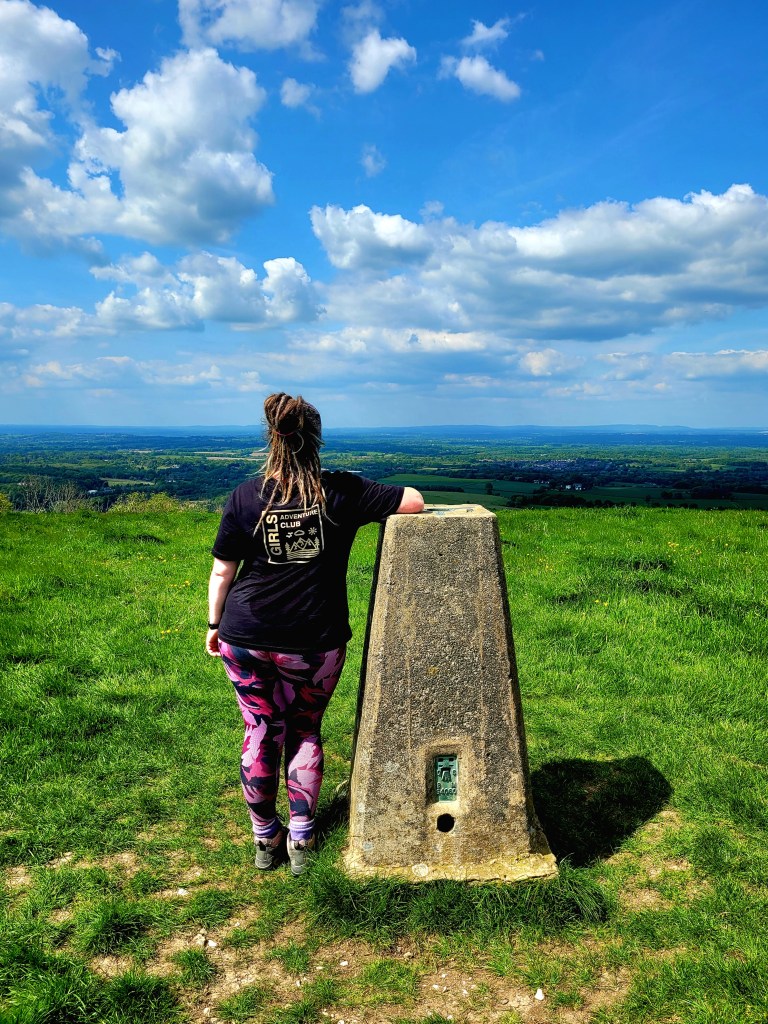
Chanctonbury Ring trig point (TP2110)

When you’re ready, you can explore the South Downs Way, or head back the way you came to Cissbury Ring.

Or, you can test local legend and run around the beech trees seven times. The devil is said to appear and offer you some soup – would you accept?

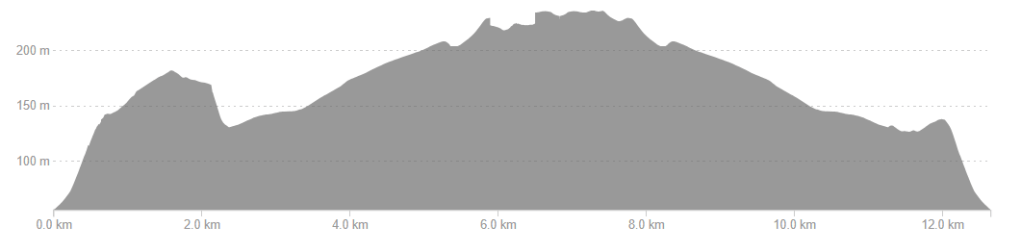
Full route map, elevation profile and link for the route on Strava below.